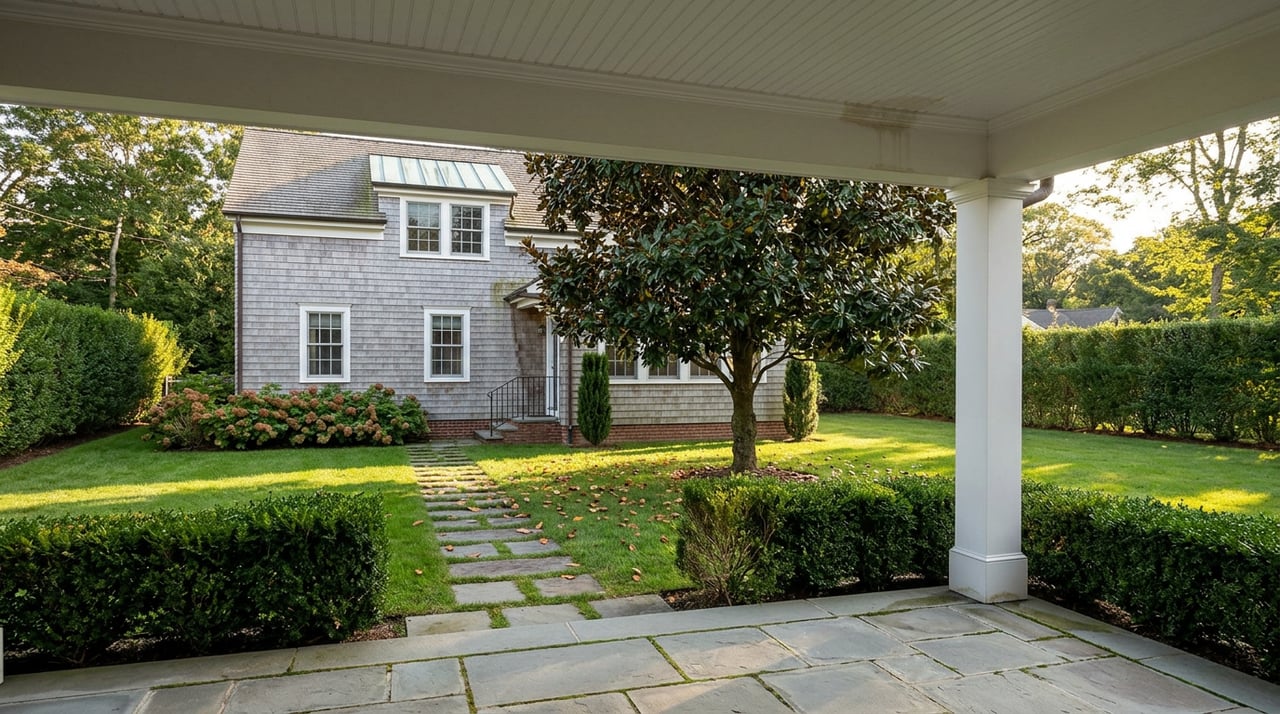
Danny Plueddemann broke ground on a backyard unit on his Druid Hills lot and had it built in 99 days. The project cost $160,000, but $80,000 of it came from a forgivable, interest-free loan through the city. He spent another $5,000 to $6,000 just getting drawings and mechanical engineering reports ready for the application. That is the math homeowners have been passing around since the story broke in August: build an accessory dwelling unit, let the city cover half, and end up with a rental asset for the price of a nice kitchen remodel.
What most of that conversation skips is the fine print sitting underneath both the loan program and the new state law that's supposed to make this even easier. If your lot sits inside one of Charlotte's local historic districts, the calendar on the wall doesn't move for you the same way it does for everyone else. And if you're chasing the $80,000, the money comes with a rent ceiling that changes what kind of asset you're actually building.
What the State Just Ordered Charlotte to Allow
Governor Josh Stein signed the Regulatory Reform Act of 2026, known in Raleigh as Senate Bill 445, on August 11. Buried inside a broader housing bill is a provision that takes effect January 15, 2027, and it requires any non-coastal North Carolina city over 50,000 residents, Charlotte and Raleigh both included, to allow at least one accessory dwelling unit on every lot where a single-family home is already permitted.
The bill strips away a specific list of tools cities have used for years to make ADUs technically legal but practically impossible: conditional zoning hearings, parking mandates beyond one space per unit, bans on renting out either the main house or the ADU long-term, refusals to connect utilities when capacity exists, permit fees higher than what a single-family home would pay, and size caps below 800 square feet.
For most Charlotte homeowners, this closes the gap between "allowed on paper" and "actually buildable." Discretionary review disappears. A code-compliant application gets processed the way a garage permit does, not the way a rezoning case does.
The Two Words That Keep the Exemption Alive
The same section of the bill carves out three things the by-right mandate does not touch: private deed covenants between property owners, properties not connected to water, sewer, septic, or well service, and properties inside a historic preservation district or National Historic Landmark.
That third exemption matters more in Charlotte than in most cities its size, because Charlotte has eight local historic districts where the Historic District Commission reviews exterior changes under a Certificate of Appropriateness, not the zoning code alone. Dilworth is the best known of them. Wilmore, Fourth Ward, and Wesley Heights carry the same designation and show up on the same HDC meeting agendas most months.
None of that changes on January 15, 2027. A homeowner in Dilworth still needs a COA before a detached ADU goes up, the same commission still reviews massing, materials, and street visibility, and the process still runs on the HDC's monthly hearing schedule rather than a same-day ministerial approval.
| Most Charlotte lots after Jan. 15, 2027 | Lots inside a Local Historic District | |
|---|---|---|
| Approval type | By-right, ministerial | Certificate of Appropriateness required |
| Review body | Building permit staff | Charlotte Historic District Commission |
| Timeline | Days to weeks once plans are code-compliant | Tied to HDC's monthly hearing calendar |
| Design discretion | None beyond code | Commission evaluates massing, materials, street visibility |
The practical takeaway isn't that a historic-district ADU is harder to get approved. Plenty get approved every cycle. It's that the state law's promise of a uniform, discretion-free process doesn't extend to those blocks, so a homeowner planning a project in Dilworth is still on the HDC's timeline, not the new state floor.
What $80,000 in Free Money Actually Requires
Charlotte opened the Queen City ADU Program in September 2025, offering up to $80,000 in interest-free, forgivable financing, capped at half the total project cost. The city says it received 243 applications. As of mid-August 2026, 21 homeowners had been approved and two units were finished, Plueddemann's among them.
The loan isn't a grant. It converts to a gift over time, and only if the homeowner keeps a tenant in the unit who earns at or below 80% of the area median income, with rent capped near the fair market rent for someone at 70% of AMI. Forgiveness runs at $10,000 per year of compliance over eight years, or as fast as $15,000 per year if the tenant holds a housing voucher or comes through a city housing partner, which can wipe the loan clean in just over five years.
Councilwoman LaWana Mayfield, who chairs the city council's housing committee, said she expects the program to reopen given the volume of interest it already drew.
The tradeoff is straightforward once it's written out: half your construction cost, in exchange for renting below market for up to eight years. For a homeowner who wants a place for an aging parent or an adult child, the rent cap is irrelevant and the free capital is pure upside. For someone modeling an ADU as a rental income stream at market rates, the cap is the actual price of the loan, and it belongs in the same spreadsheet as the construction estimate.
The Size Cap Charlotte Already Cleared
One detail that doesn't change under the new law is how big an ADU can be. Charlotte's existing rule caps a detached unit at 50% of the primary home's floor area or 1,000 heated square feet, whichever is smaller, with one unit permitted per lot. The new state floor bars cities from capping ADUs below 800 square feet. Charlotte's cap already sits above that line, so nothing shifts here regardless of which side of a historic district boundary your lot falls on.
Height still drives setback. A unit under 24 feet tall can sit as close as 3 feet from the side and rear property lines. Cross 24 feet and the rear setback jumps to 15 feet, with the full side setback for your zoning district applying as well. On a typical in-town lot, that's often the number that decides whether a second story pencils out at all.
Deciding Which Path Fits Your Lot
Before sketching a floor plan, four questions settle most of what matters:
- Confirm whether your parcel sits inside a Local Historic District. The city's Historic Districts pages and the HDC's case files list the boundaries block by block.
- Check your lot's existing zoning and setbacks through the city's parcel lookup tools, since the height-triggered setback rule can eliminate a second story before design even starts.
- Decide whether the household living in the ADU needs to clear the 80% AMI rent cap that comes with the Queen City ADU Program, or whether market rent matters more than the forgivable financing.
- If the program appeals to you, use the MyADU Eligibility Tool to check initial qualification before committing design money, since the waitlist behavior after the first 243 applications suggests the next round will move quickly.
FAQ
Does the new state law override my neighborhood's deed restrictions? No. The exemption for private covenants means a homeowners association or a set of recorded deed restrictions can still limit or prohibit an ADU regardless of what the state now requires cities to allow.
My house is in Dilworth. Does January 15, 2027 change anything for me? Not the approval path. You'll still need a Certificate of Appropriateness from the Historic District Commission before building, the same process that applies today.
Is the ADU size cap going up along with the new rules? No. Charlotte's cap of 50% of the primary home's floor area or 1,000 heated square feet, whichever is smaller, already exceeds the 800-square-foot floor the state law sets, so it stays as is.
Can I still apply for the $80,000 forgivable loan? The first round closed after 243 applications and 21 approvals. Councilwoman Mayfield has said she expects the program to reopen, so the interest form is the place to watch for the next window.
If you're weighing an ADU on a lot in Dilworth, Elizabeth, SouthPark, or anywhere else across Charlotte and want to know which path actually applies to your property before you spend money on drawings, Carolina Precision Builders can walk the site with you and map out what the current rules, and the ones arriving in January, mean for your specific lot. Request a complimentary project consultation to start that conversation.