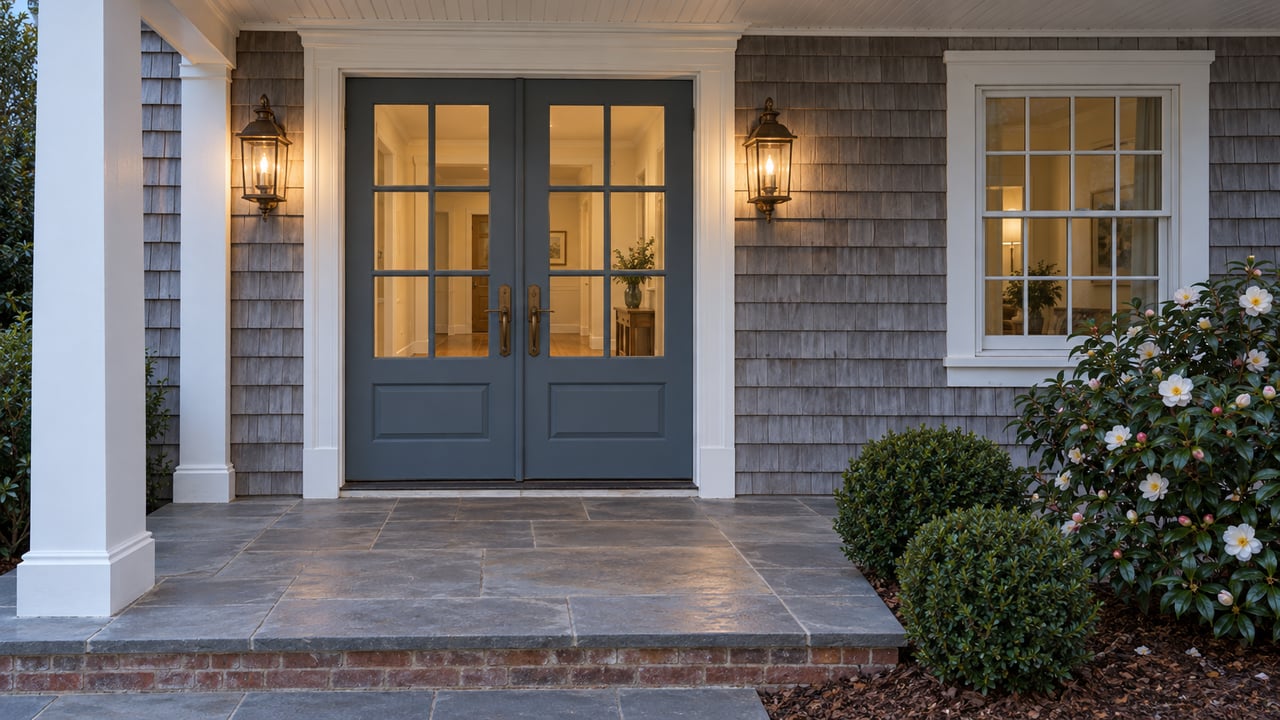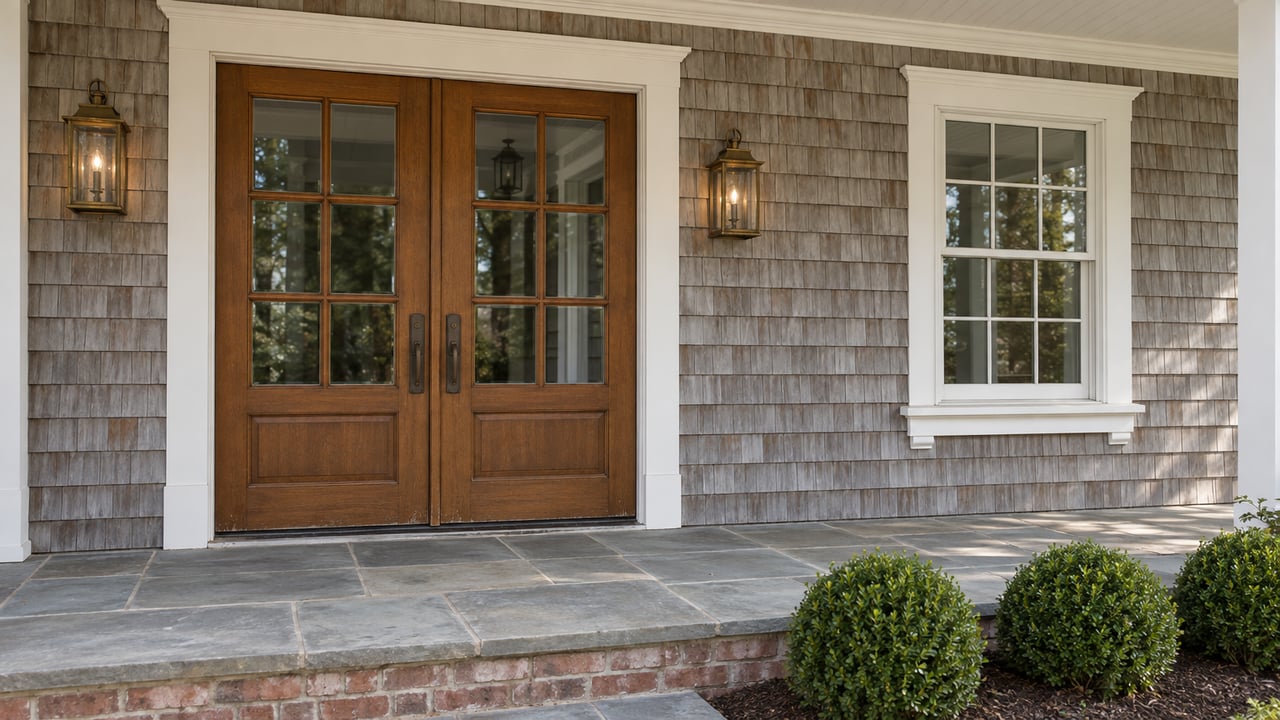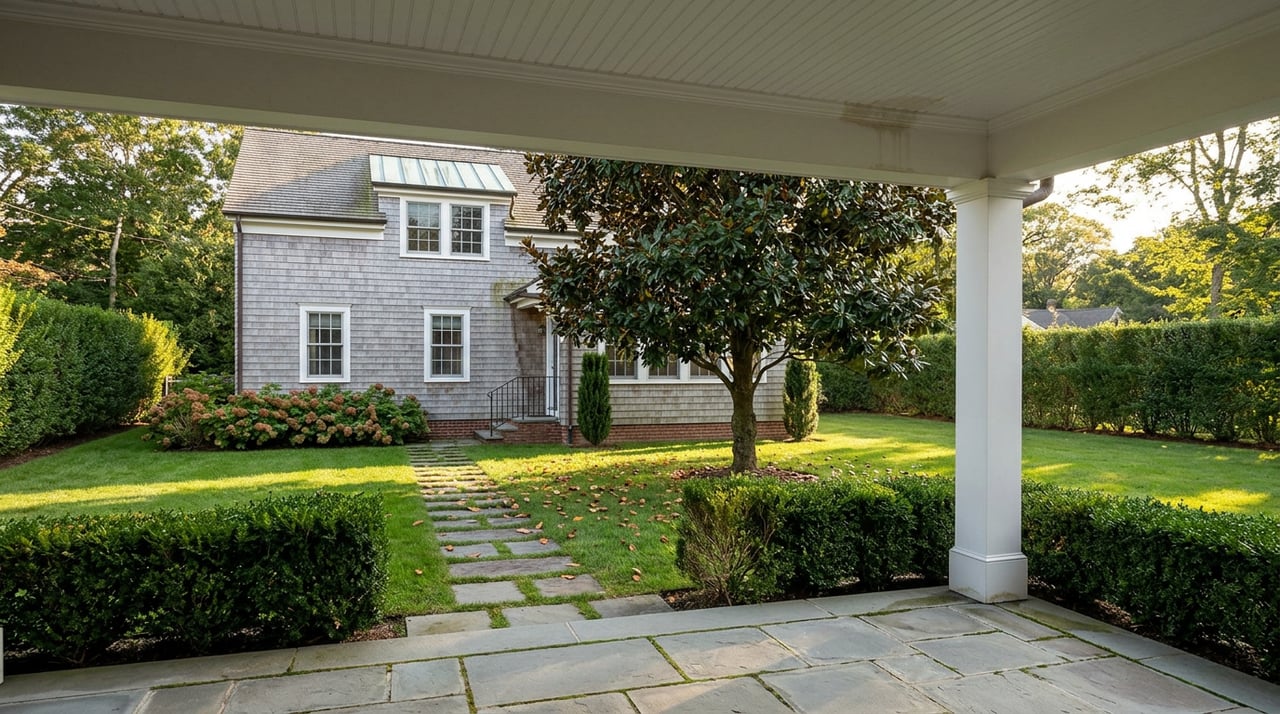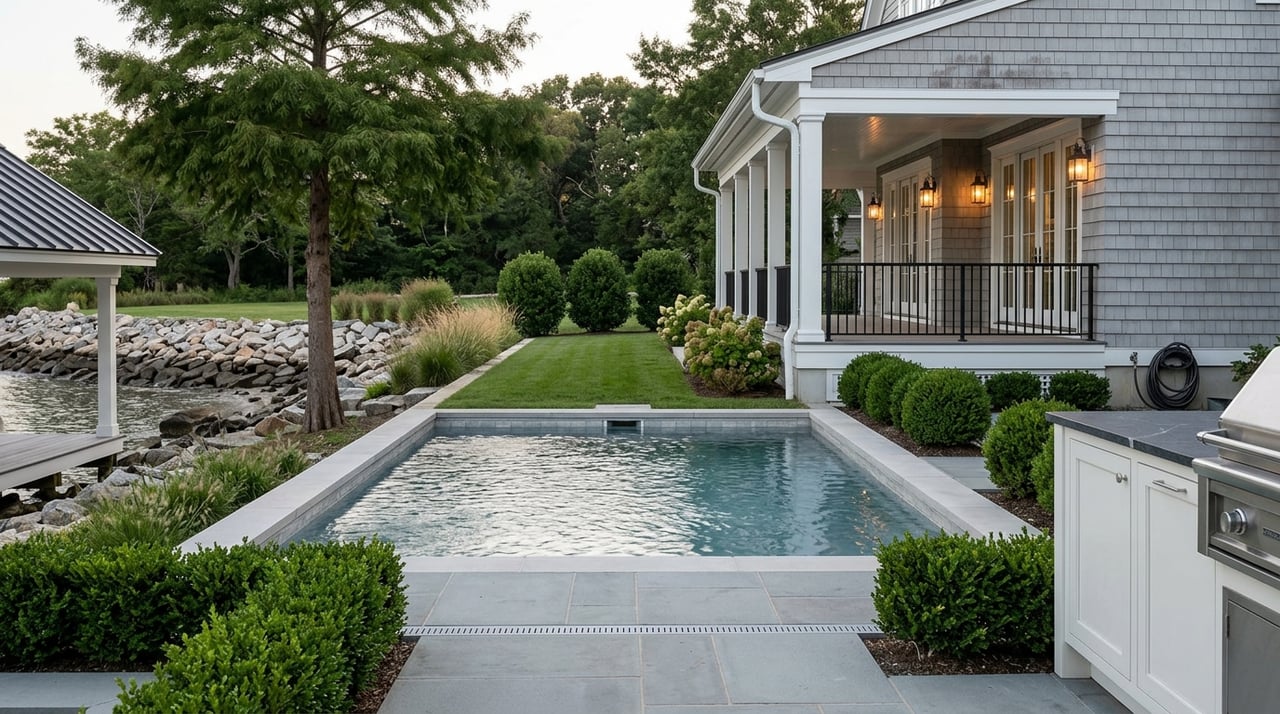
Your Lake Norman backyard can feel like a private retreat, but getting there takes more than choosing finishes and furniture. If you are planning a dock, pool, covered porch, or outdoor kitchen, you are also planning around shoreline rules, county permits, grading, and drainage. When you understand how those pieces fit together from the start, you can protect your investment, avoid rework, and create an outdoor space that functions as beautifully as it looks. Let’s dive in.
Start With One Master Plan
One of the biggest mistakes you can make at Lake Norman is treating a dock, pool, and outdoor room as separate projects. In reality, each element affects the others. Grades, drainage paths, utility runs, equipment locations, circulation, and permit timing can all change based on what goes where.
A better approach is to plan the entire yard and shoreline as one connected project. That matters even more on waterfront property, where Duke Energy shoreline requirements, Mecklenburg County permits, possible City of Charlotte review, and HOA approval may overlap. Building from a coordinated plan helps you avoid expensive changes after concrete, hardscape, or structures are already in place.
Know The Approval Layers
At Lake Norman, outdoor construction is often shaped by more than one approval process. Before work begins, it helps to understand which agencies or organizations may have a role in your project.
Duke Energy Shoreline Rules
Because Lake Norman is part of Duke Energy’s Catawba-Wateree hydro project, shoreline work is not only a design decision. Duke Energy asks owners to contact Lake Services before making changes to piers, docks, or shoreline property, and it requires lake-use permits for work on Duke lake property or within the FERC project boundary.
If your contractor needs to use Duke-owned access areas to launch materials or equipment, a separate access permit may also be required. Duke’s Catawba-Wateree Shoreline Management Plan also guides construction, excavation, and shoreline stabilization within the reservoir system, including Lake Norman.
Mecklenburg County Permits
For residential work, Mecklenburg County Code Enforcement handles building, electrical, plumbing, and mechanical permits. That matters for outdoor projects because a covered porch, outdoor kitchen, pool equipment area, or bath addition may involve several permit types rather than one simple application.
If you are adding a pool, Mecklenburg County also requires Public Health approval and building permits, along with a plot plan. In other words, pool placement, drainage, and site layout need to be addressed early, not after the design is finalized.
Land Development And Stormwater Review
Mecklenburg County Land Development states that land-development plans must be approved before a building can be built or land can be graded. That is why drainage and grading should be part of the first design conversations, especially on sloped waterfront lots.
Stormwater planning is not just a technical detail. Mecklenburg County tracks impervious surfaces because they affect runoff and stormwater management, as explained in its impervious mapping resources. More hardscape can mean more runoff, which can influence both design choices and project review.
City And HOA Review
Some Lake Norman properties may also fall within Charlotte jurisdiction. In those cases, projects such as docks, pools, retaining walls, decks, or detached accessory structures can involve concurrent Mecklenburg County and City of Charlotte review.
If your property is in an HOA, you may also need separate architectural approval. As the North Carolina Department of Justice explains, HOA approval is a private requirement and is separate from public permits.
Sequence The Project Carefully
At Lake Norman, timing matters almost as much as design. A smart sequence can reduce delays, simplify approvals, and keep one feature from forcing changes to another.
A Practical Order Of Operations
A well-planned project usually follows this order:
- Survey the site and create a full concept plan
- Confirm shoreline requirements and HOA guidelines
- Finalize grading, drainage, and runoff strategy
- Secure permits and approvals
- Build the hardest-to-move structural elements first
- Install utilities, equipment, and supporting systems
- Complete finishes, planting, and final details
This sequence aligns with Duke Energy’s shoreline permit framework and Mecklenburg County’s front-end land-development review. It also gives you a better chance of getting the dock approach, pool deck elevations, porch access, and utility routes right the first time.
Plan Docks Before The Rest Of The Yard
Your dock may be the destination, but it also shapes the rest of the site. Access paths, retaining walls, shoreline stabilization, lighting, and lawn or terrace transitions all connect back to how the shoreline is designed.
That is why dock placement should be considered before finalizing a pool terrace, patio, or outdoor room. If you lock in grades and circulation too early, you may end up with awkward access, disrupted drainage, or a shoreline plan that no longer works as intended.
Duke’s shoreline management guidance also supports careful shoreline stewardship, including restoration and native planting approaches that help manage erosion. On some lots, a lower-impact landscape strategy near the water can support both long-term maintenance and a cleaner visual transition to the shoreline.
Design Pools With Permits In Mind
A pool at Lake Norman is more than a lifestyle upgrade. It is also a site-planning exercise that needs to account for approvals, setbacks, drainage, and equipment placement.
Because Mecklenburg County requires Public Health approval, a building permit, and a plot plan for residential pools, it makes sense to decide early where the pool will sit and how water will move around it. Decking, steps, fencing, and equipment pads can all affect usable space and runoff patterns.
If your lot slopes toward the lake, this step becomes even more important. What looks like a simple pool placement decision can also influence retaining needs, drainage design, and how the pool connects to the house and shoreline.
Coordinate Outdoor Rooms And Kitchens
Covered porches, lanais, fireplaces, and outdoor kitchens often look like finish-level upgrades, but they usually involve structural and trade coordination. Electrical, plumbing, and sometimes mechanical permits may all be part of the scope, according to Mecklenburg County’s permitting requirements.
That makes these spaces ideal for integrated planning. If you know from the beginning where you want cooking, refrigeration, lighting, fans, heaters, or a future bath, those choices can be coordinated before slab work, framing, and hardscape are complete.
Take Drainage Seriously
Drainage is one of the most important design issues on a Lake Norman lot, and one of the easiest to underestimate. It affects your yard after every storm, and it can shape everything from retaining design to hardscape layout.
Charlotte-Mecklenburg Storm Water Services notes that one inch of rain on an acre of asphalt can generate 27,000 gallons of runoff. Its post-construction rules use buffers, open-space requirements, and stormwater measures to reduce flooding, erosion, and pollution.
For waterfront property, that means porches, pool decks, driveways, walkways, and dock approaches should be designed with runoff in mind. Good drainage planning can help direct water away from structures, reduce erosion pressure, and support a more durable outdoor environment.
Why A Single Builder Can Help
When a project touches the shoreline, hardscape, structures, and utilities, coordination becomes a major part of the value. A single builder overseeing the sequence can help keep surveys, design decisions, permit applications, inspections, and subcontractors aligned.
That matters because outdoor projects at Lake Norman often involve overlapping review paths. Duke Energy shoreline permissions, Mecklenburg County permits, possible city review, and HOA approval can all affect timing and scope. Clear coordination can reduce the risk that one late change forces another redesign.
Build For Long-Term Use
A successful outdoor project is not only about how it looks on day one. It should also work well over time, with practical access, durable materials, manageable drainage, and a layout that supports how you actually live.
If you are planning a dock, pool, and outdoor room at Lake Norman, the best first step is usually a full-site conversation. With the right planning sequence, you can make confident design choices while respecting shoreline rules, permit requirements, and the realities of waterfront construction.
If you are ready to plan a thoughtful, well-coordinated outdoor living project, Carolina Precision Builders can help you bring the full picture into focus.
FAQs
What permits might a Lake Norman dock project require?
- A Lake Norman dock project may require Duke Energy lake-use permitting for work on Duke lake property or within the FERC project boundary, and some projects may also involve local review depending on location and scope.
What approvals are needed for a pool in Mecklenburg County?
- A residential pool in Mecklenburg County requires Public Health approval, a building permit through LUESA, and a plot plan as part of the application process.
Why should a Lake Norman outdoor project be planned as one master plan?
- A master plan helps coordinate grading, drainage, utilities, permit timing, shoreline access, and structural placement so one feature does not create problems for another later.
Does an HOA approval replace permits for Lake Norman exterior work?
- No. HOA approval is separate from public permits, so you may need both architectural approval from the HOA and permits or reviews from public agencies.
Why is drainage important for Lake Norman pools and outdoor rooms?
- Drainage affects runoff, erosion, hardscape performance, and how water moves across a sloped waterfront lot, so it should be addressed early in design rather than after construction starts.