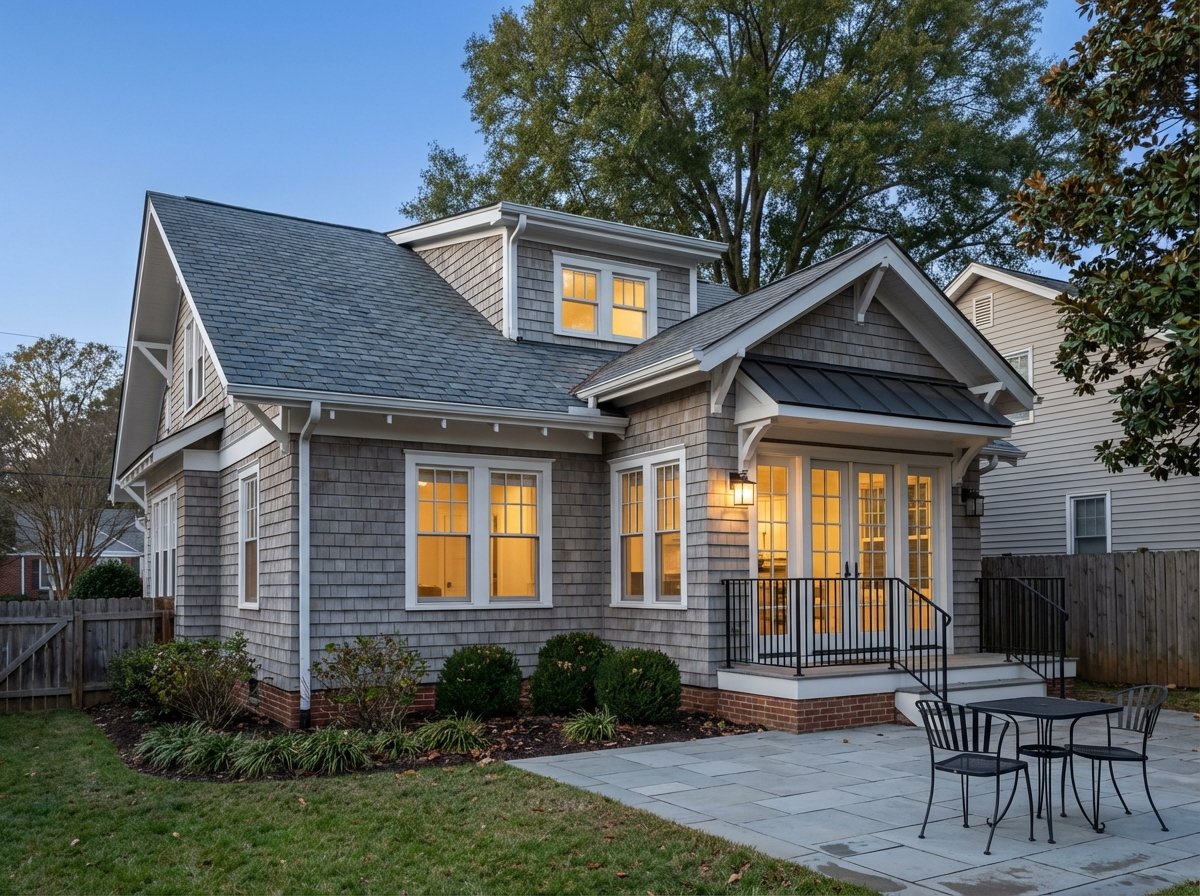
Love your Dilworth bungalow but need more space? You are not alone. Many homeowners want a larger kitchen, an extra bedroom, or a better primary suite without giving up the charm that drew them to the neighborhood. In this guide, you will learn how to plan additions that respect Dilworth’s historic character, navigate approvals with confidence, and set clear expectations for cost and timing. Let’s dive in.
Why Dilworth additions are different
Dilworth sits inside a City of Charlotte Local Historic District. Any exterior change visible from a public street typically needs a Certificate of Appropriateness, or COA, from the Historic District Commission before work starts. The HDC provides design standards and a clear process that help you shape an addition that fits the neighborhood fabric. Review the City’s Historic District guidance to understand the framework you will work within (Charlotte Historic Districts).
The HDC’s process includes staff consultations, administrative approvals for minor work, and full-commission hearings for larger projects. The Commission follows a monthly schedule and posted deadlines. Start early and plan your submittal steps using the City’s COA page, which outlines what is reviewed, how to apply, and typical timelines (COA procedures and checklists).
Zoning and lot limits to know
In addition to the HDC, Charlotte’s Unified Development Ordinance sets dimensional rules for most Dilworth blocks under Neighborhood 1 districts. In N1-B for example, the typical minimum front setback is 27 feet, side setbacks are often 5 feet, the minimum rear setback is 35 feet, and the maximum building height is 48 feet. Height rules also include step-backs and height-plane provisions, so confirm your exact parcel designation and limits in the UDO (Neighborhood 1 standards).
An existing recorded plat or the blockface setback average can supersede the basic front setback. That means the established front line of your block may control where new work can occur at the street. Dilworth lots are often narrow at the front with deep rear yards, and some blocks include alleys that improve rear access and reduce street impact. To understand your block’s pattern, review the City’s Dilworth maps (Dilworth HDC maps).
Preservation-minded design principles
Additions should be compatible, clearly subordinate, and reversible where possible. The National Park Service’s guidance on new additions outlines best practices: keep new massing secondary, preserve significant historic fabric, and differentiate new from old without clashing (NPS additions guidance).
For Dilworth’s American Small House and bungalow types, the City emphasizes preserving the original massing and roofline. The guidance explicitly warns that incompatible dormers and full second-story additions that dominate the front can compromise integrity. Designs that keep the front elevation visually “low” and protect the porch and primary wall typically fare better in reviews (American Small House guidance).
Addition types that work
Rear two-story addition
A rear two-story volume, placed entirely or mostly behind the original house, often draws the least street visibility. This approach preserves the front porch and roofline while adding significant square footage. It can be the most HDC-friendly way to solve space needs without changing the bungalow’s face.
Set-back second story
A partial second story set back behind the front thermal wall reads as a secondary layer from the street. When well proportioned, this “step-back pop-top” protects the porch and primary roofline while delivering upper-level bedrooms or a bath suite. Be deliberate about where the step-back begins and how the porch visually supports new mass.
Attic conversion with rear or side dormers
If you need modest space, consider activating the half-story. Rear or side dormers can add light and headroom without changing the front silhouette. Avoid oversized front dormers that shift the house’s street reading from one-story to two-story.
Hyphen or recessed connector
For a larger addition, a narrow connector between the historic house and new volume helps the original mass remain legible. This separation technique respects the old form while allowing more program area in back or to the side.
Materials, windows, and rooflines
- Preserve the porch. Keep original porch columns, proportions, and eave expression intact. If you add mass above, ensure the porch still looks visually capable of supporting what sits behind it.
- Align rhythms. Line up new window heads and sills with existing openings where visible. Respect existing floor heights and cornice lines to keep a calm, ordered façade.
- Be compatible, not identical. Use materials and colors that harmonize with the historic house while remaining subtly distinguishable. Many successful projects use compatible cladding with simplified detailing so the historic fabric stays primary. Confirm material choices with HDC staff during early consultation.
Process, timing, and permits
Plan your path in phases so you hit HDC milestones on time.
- Pre-design and HDC pre-submittal meeting: 2 to 6 weeks to test massing and visibility. Early staff input pays off on major projects.
- Design drawings and COA package: 4 to 12-plus weeks depending on scope and complexity. Your architect will prepare elevations, sections, site plan, context photos, and material notes that address HDC standards.
- HDC review cycle: Approximately 4 to 8 weeks from COA submittal to full-commission hearing if required. Continued cases can add months. Administrative approvals are faster but apply only to minor scopes. See the City’s COA page for procedures and deadlines (COA process).
- Building permits: A COA does not replace Mecklenburg County and City building and trade permits. After COA approval, submit for building, electrical, mechanical, and plumbing permits and schedule inspections per code. Compliance with the COA is verified during and after construction.
Note: North Carolina law allows local preservation commissions to delay demolition of contributing properties for up to 365 days while alternatives are explored. That power underscores why strategies that retain historic fabric are important if your scope approaches major removal (NC Chapter 160D).
Budget, value, and resale
Costs vary widely based on structure, scope, and finish level. National summaries place second-story additions in a broad range of about 100 to 500-plus dollars per square foot. Partial step-back additions or attic conversions usually sit at the lower end, while full roof removal and reconstruction trend higher. Treat these as planning markers and seek multiple local bids with a clear scope and a 10 to 20 percent contingency (second-story cost overview).
On resale, large additions often recoup a portion of cost, commonly in the 50 to 70 percent range depending on project type and market timing. In historic neighborhoods, value tends to hold best when additions feel seamless and preserve authenticity. Over-scaled or front-dominant designs can hurt buyer appeal, even in a strong market like Dilworth (remodel ROI insights).
Quick feasibility checklist
- Confirm your property is inside the Dilworth Local Historic District and whether it is classified as contributing. HDC staff can help you verify status (Historic Districts overview).
- Schedule an HDC pre-submittal meeting for major concepts. Bring massing sketches that show street views (COA procedures).
- Verify your UDO district and setbacks, and check recorded plats for blockface-controlled front setbacks or easements (Neighborhood 1 standards).
- Prioritize preserving the front porch and roofline. Start any second story behind the primary front wall when feasible (American Small House guidance).
- Budget for structural reinforcement, system upgrades, permits, and contingency. Obtain several detailed bids and an engineer’s review.
Common HDC concerns to address
- Front dominance. Avoid full-height new walls rising directly above the original front façade. Set back upper mass to keep the bungalow reading low from the street.
- Porch integrity. Keep original porch scale and details. If upper mass is visible, ensure the porch still feels proportional to the whole.
- Visibility. Concentrate taller work at the rear and use side or rear dormers instead of large front dormers.
- Compliance. Do not begin exterior work without a COA. Ignoring COA conditions can trigger enforcement and corrections later. Use the City’s resources to stay aligned with standards (Historic Districts resources).
Partner with a builder who knows Dilworth
Adding to a historic bungalow takes careful planning, steady project management, and respect for neighborhood character. As a boutique, owner-led builder, we collaborate closely with architects and HDC staff, coordinate permits, and deliver clean execution on site so your addition feels like it has always belonged. If you are weighing a rear addition, a set-back second story, or an attic conversion, we are ready to help you plan with clarity and confidence.
Ready to explore your options in Dilworth? Request a complimentary project consultation with Carolina Precision Builders.
FAQs
What approvals are required to add a second story in Dilworth?
- Exterior changes visible from a public right-of-way need an HDC Certificate of Appropriateness before work begins, and you still must obtain standard building and trade permits after COA approval (COA requirements).
How do Charlotte’s zoning rules affect a Dilworth addition?
- Neighborhood 1 zones set minimum setbacks and height limits that shape buildable area, so verify your parcel’s N1 district, blockface front setback, and any easements before you design (Neighborhood 1 standards).
Are front dormers or full second stories acceptable on bungalows?
- City guidance for American Small House types warns that incompatible front dormers and front-dominant second stories are not acceptable, so designs that keep new mass behind the primary front wall are typically favored (American Small House guidance).
How long does the HDC review process usually take in Charlotte?
- For major projects, plan roughly 4 to 8 weeks from COA submittal to a full-commission hearing after design development and a pre-submittal meeting, with administrative reviews faster for minor scopes (COA process).
What should I budget for a second-story addition?
- National summaries show a wide range near 100 to 500-plus dollars per square foot depending on scope, structure, and finishes, so use that as a planning range and obtain multiple local bids (second-story cost overview).
Do alleys in Dilworth help with rear additions or garages?
- Yes, on blocks with alleys, rear access can reduce street visibility for garages or rear additions and improve site logistics, but you must still meet setbacks and HDC design standards (Dilworth HDC maps).