Planning a new build, addition, or dock on Lake Norman? The HOA design review can feel like a maze, especially when you also need town permits and shoreline approvals. You want a clear path that avoids delays and protects your budget. In this guide, you’ll learn how Lake Norman HOAs and Architectural Review Committees work, what to submit, the timelines to expect, and how to sequence approvals so you can move forward with confidence. Let’s dive in.
Who approves what
HOA vs. town vs. Duke Energy
Your HOA or Architectural Review Committee enforces the community’s covenants and design guidelines. This is a private approval that you must obtain before or during permitting, depending on your HOA’s rules. Even if the town issues a permit, the HOA can require changes if your plans do not meet the covenants.
Town or county permits cover building safety, zoning, setbacks, stormwater, and inspections. Around Lake Norman, that typically means the Towns of Cornelius, Davidson, or Huntersville, and in some cases Mecklenburg County. Municipal approval is separate from HOA approval. You need both.
For waterfront projects, Duke Energy also reviews docks, boathouses, and shoreline work through its shoreline management program. Some projects may also need state or federal permits from the North Carolina Department of Environmental Quality or the U.S. Army Corps of Engineers. Missing any one of these approvals can halt your project.
What this means for you
- Expect three tracks of approval for lakefront work: HOA design review, municipal permits, and Duke Energy shoreline approval.
- Confirm whether your HOA requires ARC approval before you apply for town permits or if concurrent submission is allowed.
- Start the Duke Energy conversation early. Shoreline approvals often take the longest.
What your ARC package should include
Every HOA sets its own standards, but most Lake Norman communities expect a thorough, well-documented submittal. A complete package helps you avoid extra review cycles.
Core documents
- Completed ARC application, homeowner contact information, and owner sign-off.
- Site or plot plan with property lines, setbacks, structure footprints, driveway, any dock or shed, impervious surface calculations, and existing trees marked for removal or protection.
- Erosion and tree-protection plan, including silt fence layout and protection zones.
- Building elevations on all sides showing roof pitch, overall height, porches, chimneys, and finished floor elevation.
- Floor plan or footprint to confirm scale and setback compliance.
- Exterior materials and colors with samples or manufacturer swatches for siding, roofing, trim, stone or brick, windows, and doors. Include paint color codes.
- Roof plan with material and color, plus any rooftop equipment like solar, skylights, or HVAC.
- Landscape plan that lists plant species and sizes, lawn or groundcover, hardscape, retaining walls, lighting, and fencing.
- Lighting details that address fixture type, placement, and shielding to meet dark-sky policies if applicable.
- Fencing plan with location, height, materials, gates, and finishes.
- Driveway and parking materials that will be visible from the street or lake.
- Accessory structures such as sheds, pergolas, pool houses, or guest houses with sizes, locations, and finishes.
- Construction logistics with start and finish dates, staging area, working hours, contractor name, proof of liability insurance, site contact, and any required construction deposit.
Waterfront-specific items
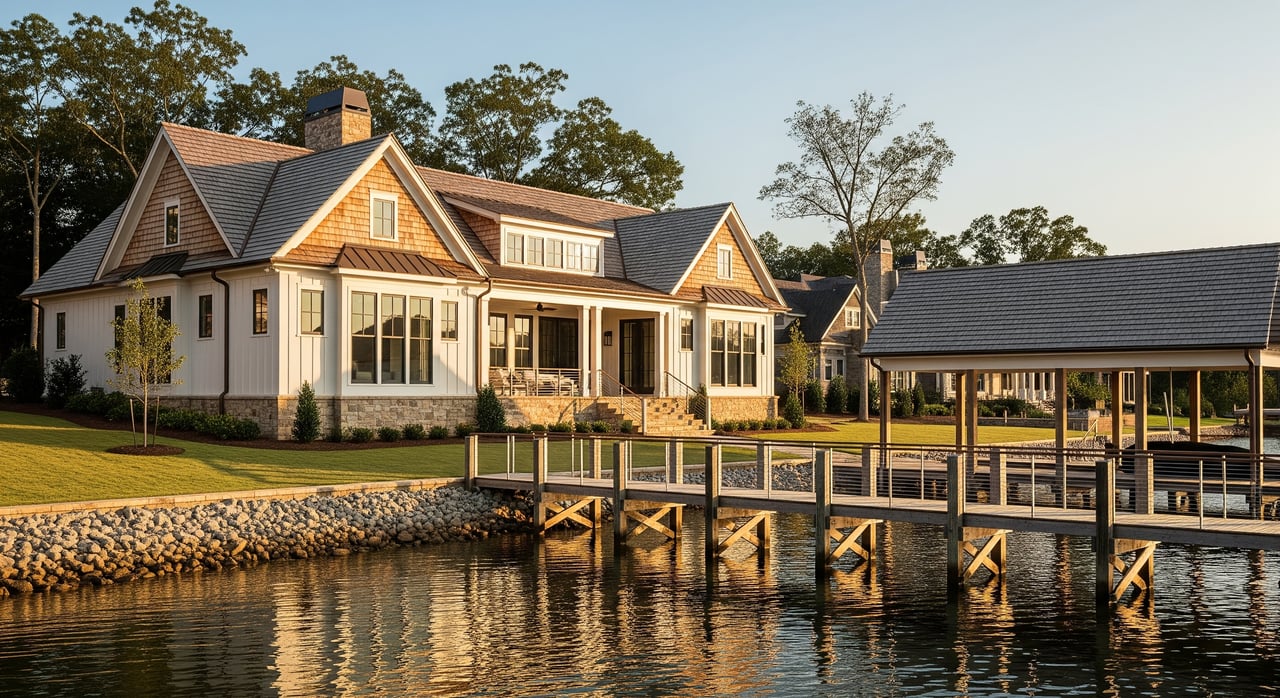
- Detailed dock or boathouse plan showing footprint, pilings, slips, roofline, elevations, and materials. Include how the dock connects to the shoreline.
- Shoreline protection or seawall plans with cross-sections.
- Mooring, float, and boatlift equipment details.
- Erosion and sediment controls for shoreline work.
- Evidence of Duke Energy shoreline permission or a plan for obtaining a shoreline use agreement. Note any riparian or easement constraints.
- Proof of applications to state or federal agencies if required for in-water work.
Helpful extras
- A color board or sample package for quick reference during review.
- Photos of your home and nearby homes for compatibility context.
- Product cut sheets for windows, doors, garage doors, and siding.
- A tree mitigation or replacement plan if removal is proposed.
Lakefront constraints to plan for
Architectural rules vary by community, but several limits are common on and around Lake Norman. Anticipating these helps you design within the lines.
- Waterfront controls for docks and boathouses, including footprint, number of slips, roof type, and setbacks from lot lines.
- Exterior material standards that prefer natural or high-quality finishes and limit basic vinyl or exposed metal siding in visible areas.
- Color palettes that require pre-approved hues and may restrict very bright colors.
- Roof pitch minimums and allowed roofing materials.
- Impervious surface caps and stormwater controls that limit hardscape area and may require mitigation.
- Tree protection and replacement requirements.
- Garage orientation rules, often favoring side or rear-loaded layouts.
- Lighting policies that require shielded fixtures and limit output and color temperature.
- Height and massing controls to maintain neighborhood scale and views.
Review timelines to expect
Timelines are ranges, not guarantees, and depend on project scope, season, and reviewer workload. Plan for a realistic schedule and build in buffer.
- HOA or ARC completeness check: same day to 1 or 2 weeks.
- ARC substantive review: commonly 2 to 4 weeks for standard projects. Waterfront or complex plans can take 4 to 8 weeks or longer.
- Revision cycles: each round often adds 1 to 4 weeks, depending on how quickly you respond.
- Municipal permits: small jobs and repairs may be 1 to 4 weeks. New homes or projects with stormwater review often take 4 to 12 weeks or more.
- Duke Energy shoreline approval: often 30 to 90 days, sometimes longer if site visits or easement issues arise.
- State or federal permits for in-water work: can add weeks to months to your timeline.
Tip: On the lake, Duke Energy and any state or federal permits are usually the longest lead items. Start those conversations at the concept stage.
Common causes of delay
- Incomplete ARC packages, especially missing elevations, unclear site plans, or late color selections.
- Conflicts between HOA standards and municipal zoning or variances that require negotiation or a variance request.
- Starting work before written HOA approval, which can trigger fines and stop-work orders.
- Dock or shoreline work submitted late to Duke Energy or state agencies.
- Tree removal without prior review or required mitigation.
- Erosion control issues that draw enforcement or neighbor complaints.
- Neighbor concerns that lead to additional hearings or review cycles.
Smart sequence that keeps you on schedule
Follow a predictable, documented sequence to reduce friction and keep your project moving.
Review covenants and guidelines. Read the recorded declarations and current design rules to identify limits on materials, colors, roof pitch, max height, tree removal, and docks. Note the ARC application requirements.
Hold a pre-submittal meeting. Meet the ARC early to review your concept. For waterfront work, contact Duke Energy shoreline management at the same time. Early feedback can prevent costly redesigns.
Prepare an integrated plan set. Align your site plan, elevations, grading, drainage, and impervious calculations so they satisfy both ARC and municipal reviewers. Consistency prevents conflicting comments.
Confirm submission order in writing. Some HOAs require ARC approval before permitting. Others allow concurrent submission. Clarify expectations and follow them.
Start shoreline approvals early. Docks, seawalls, and in-water work typically take the longest. Track Duke Energy, NCDEQ, and USACE steps from day one.
Assemble deposits and insurance. Many HOAs require a construction deposit and a certificate of liability insurance naming the HOA. Confirm contractor working hours, parking, and site rules.
Host a pre-construction meeting. Walk the site with the HOA representative and your builder. Agree on staging, silt fence, tree protection, parking, and inspection touchpoints.
Keep records and communicate. Share updated plans and permits with the ARC, keep written approvals, and retain copies on site. Clear documentation avoids misunderstandings and delays.
Builder tips that reassure reviewers
- Provide detailed control drawings for erosion control, tree protection, and staging.
- Share a construction schedule and a single point of contact for questions and neighbor concerns.
- Avoid grading or tree removal until all approvals are in hand.
- Plan and budget for restoration of any HOA common areas used for access or staging.
How we support Lake Norman projects
You want a partner who can navigate HOA guidelines, town permitting, and shoreline rules without losing momentum. As a boutique builder with deep local experience, Carolina Precision Builders coordinates with HOAs, municipal reviewers in Cornelius, Davidson, Huntersville, and Mecklenburg County, and the shoreline program for lakefront projects. We organize complete ARC packages, lead pre-application meetings, and track third-party approvals so your design, schedule, and budget stay aligned.
Our owner-led approach keeps communication clear. We document approvals, manage required deposits and insurance, and maintain clean job sites with robust erosion and tree protection. Whether you are planning a custom lake home, an addition, or a dock-integrated project, we collaborate with your architect and designer to submit once, submit right, and build with confidence.
Ready to talk through your plans and timeline? Connect with Carolina Precision Builders to request a complimentary project consultation.
FAQs
Do I need HOA approval before applying for a town permit on Lake Norman?
- Check your HOA covenants. Some require ARC approval before any exterior work starts, while others allow concurrent review with the town. Confirm the required sequence in writing.
What if the town approves my plans but the HOA denies them?
- The town enforces codes, and the HOA enforces covenants. You must meet both. If your project violates HOA rules, the HOA can require changes or removal even if you have a permit.
How long do HOA or ARC approvals usually last?
- Policies vary. Many approvals expire after 6 to 12 months if construction has not started. Ask about extensions and get any extension granted in writing.
What happens if I start work without HOA approval?
- Expect fines, HOA stop-work orders, possible removal of unapproved work, and strained relations with the board and neighbors. Town stop-work orders can also occur if permits are missing.
Who approves docks and shoreline work on Lake Norman?
- Duke Energy manages shoreline approvals for docks and boathouses. Some projects also need state or federal permits, and your HOA may have additional rules for waterfront structures.
How long does Duke Energy dock approval take?
- Plan for about 30 to 90 days depending on complexity and site conditions, plus any additional time for state or federal permits if those are required.